


High Capacity Compatible iPhone Battery Review
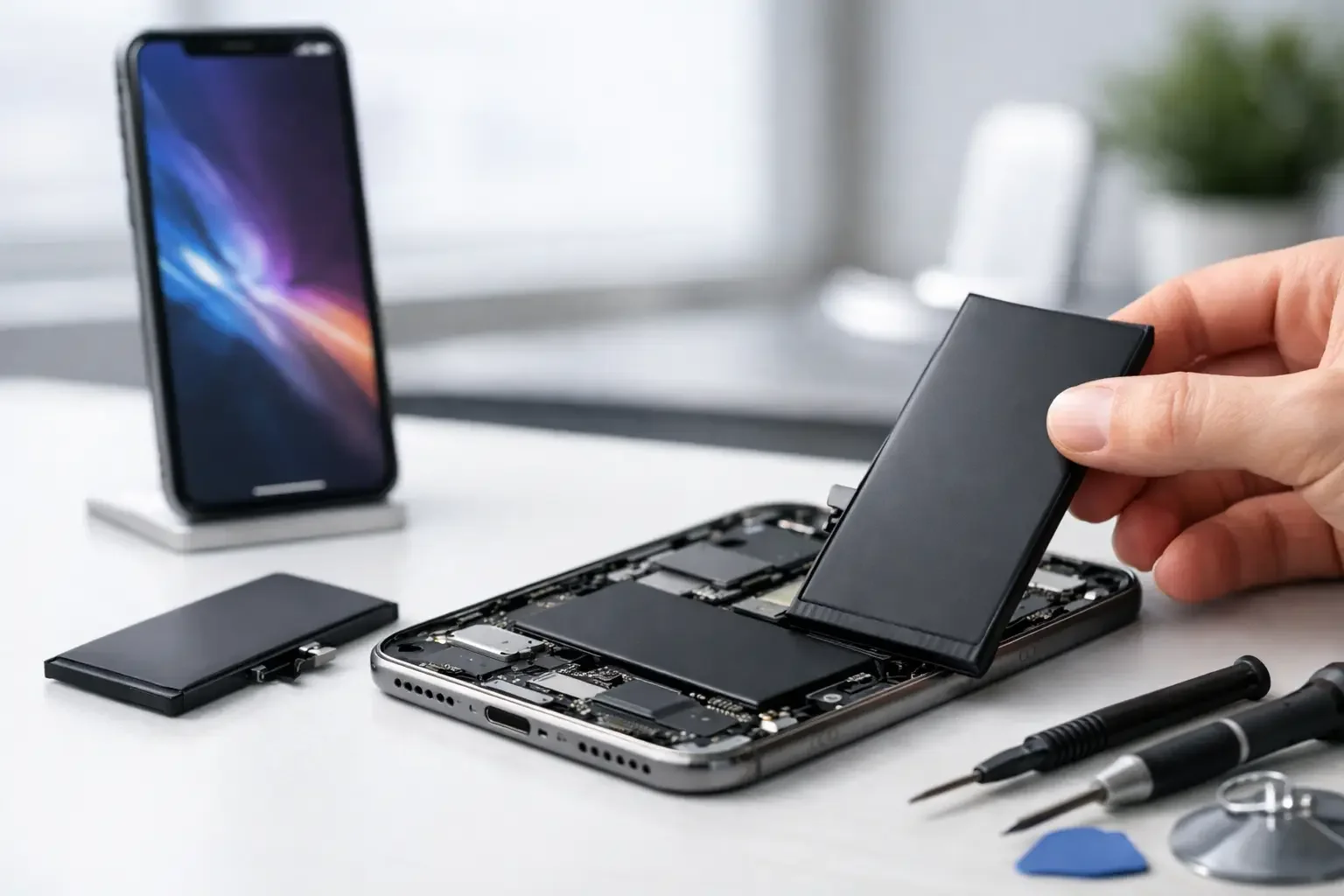
When an iPhone arrives in the lab with reduced battery life, sudden shutdowns, or compromised Battery Health, the question isn’t just which battery to use, but what results can be expected after replacement. In this high capacity compatible iPhone battery review, we analyze what truly changes compared to a standard battery, the tangible benefits, and what technical aspects should be checked before purchase.
High Capacity Compatible iPhone Battery Review: What Does It Really Mean
The term high capacity is often used generically, but technically it indicates a battery compatible with a nominal capacity that is higher than the standard equivalent replacement. It does not automatically mean it's better in every scenario. A battery with higher mAh can offer better autonomy, but the outcome depends on the quality of the cells, the stability of the protection electronics, physical alignment in the frame, and the overall condition of the device.
For those working in repairs, the real difference is measured across three parameters: performance in cycles, behavior under load, and temperature consistency. A well-built high capacity battery tends to withstand intensive use better, especially on devices with energy-hungry displays or systems on chip (SoC) that, after recent software updates, have higher energy demands. If the construction quality is mediocre, the claimed capacity remains just a commercial figure.
Where a High Capacity Battery Can Make a Difference
The most obvious advantage is daily autonomy. On models used in business contexts, navigation, hotspot usage, continuous messaging, or field applications, having a larger energy reserve reduces returns for disappointing battery performance after repair. This is particularly useful for shops and labs that want to offer customers a solution perceived as an upgrade, not just a restoration.
There is also another less-discussed aspect: a battery with greater capacity, if designed correctly, can operate with a more favorable operational margin. Essentially, under equivalent use, the number of deep discharges decreases and the stress per cycle can be more contained. This isn't an absolute rule, but in well-selected products, the benefit is evident.
It should be noted that the increase in autonomy is not always proportional to the declared number of mAh. If a manufacturer promises a very high jump while maintaining nearly identical physical dimensions, caution should be exercised. In the world of compatible batteries, overly optimistic numbers often correlate with unreliable measurements or long-term performance below expectations.
How to Evaluate a Compatible Battery Beyond the Technical Sheet
Nominal capacity is only the first filter. For a serious evaluation, one must look at the overall quality of the battery. The cells must be stable, the protection circuit must properly manage voltage, temperature, and charge, and the flex must present reliable tolerances during assembly.
A decisive point is the consistency of production. In labs that perform frequent replacements, the difference between a good supplier and an average one is seen in the repeatability of results. If out of ten pieces the performance is uniform, post-sales times are reduced. If performance varies between lots, the risk of returns and disputes increases.
Mechanical compatibility also matters more than it seems. A high capacity battery may have a cell pack slightly different in layout or thickness. If the component is well-designed, the installation remains clean and without unusual tensions on displays, shields, or connectors. If the tolerance is poor, critical issues can arise over time, even if initial autonomy appears good.
Practical Review: Real Pros and Cons
On the positive side, a good high capacity compatible iPhone battery offers a tangible improvement for end users. The phone lasts longer, handles extended sessions better, and reduces the annoyance of intermediate charges. For the lab, this translates into a more appealing proposal and is easier to justify during estimates.
Another advantage is commercial flexibility. Not all customers seek the cheapest replacement. A segment of clientele, especially those still using perfectly functioning but dated iPhones, prefer to invest a little more to extend the life of the device with a higher-performing battery.
On the flip side, it’s important to consider limitations. The high capacity battery does not resolve motherboard issues, abnormal power draws, unstable basebands, damaged connectors, or poorly optimized software. If the iPhone consumes too much due to an underlying defect, even the best replacement will offer only partial benefits.
Then there’s the issue of system messages. Depending on the model and type of intervention, the iPhone may display notifications regarding the battery not being recognized as original. This aspect doesn’t necessarily correlate with poor quality of the replacement, but it should be transparently communicated to the customer before installation.
When It’s Worth It Compared to a Standard Battery
The choice depends on usage profile and the residual value of the device. For an iPhone still used intensively every day, the high capacity version makes sense if the cost delta remains proportional and if the replacement comes from a reliable supply chain. For a secondary or lightly used device, a well-built standard battery may be more than sufficient.
For service centers, there is also an operational criterion. If a customer frequently returns complaining of insufficient autonomy even after replacement, switching to a high capacity solution can reduce complaints on certain models known for higher consumption. Conversely, if the focus is the lowest price, the standard battery remains the most straightforward choice.
In other words, there is no one-size-fits-all answer. Choosing a high capacity battery is beneficial where real autonomy is needed and where the lab wants to differentiate the offer with a higher-end replacement. It’s less advisable when the phone has other structural limitations, such as modest performance or hardware issues that affect consumption.
Compatibility, Codes, and Model Verification
The most critical point, before quality, is ordering the correct component. In the Apple world, it’s not enough to stop at the commercial name of the device. One must verify the precise model, year, connector, and actual compatibility of the replacement. A mistake in this phase generates bench downtime, returns, and wasted time.
For those working with multiple product families, having a structured catalog by category and model is a concrete operational advantage. Consulting the dedicated sections for iPhone Spare Parts and, if necessary, also the areas for iPad Spare Parts, MacBook Spare Parts, Apple Watch Spare Parts, and Laboratory Accessories allows for faster management of supplies and interventions, without wasting time among different suppliers.
In a professional context, the availability of the replacement should be viewed alongside the depth of assortment. If, in addition to the battery, adhesives, tools, double-sided tapes, screws, shields, and complementary components are available, the work flows better and the risk of halting a repair for seemingly minor details is reduced.
What to Check After Installation
The review of a battery doesn’t end with installation. Initial checks should be made immediately after assembly and in the early cycles. It’s useful to verify charge absorption, percentage stability, behavior under stress, and temperatures during use and charging. A good replacement shows a predictable curve and does not exhibit abnormal drops in the first discharge points.
The customer’s feedback in the following days is also valuable. If autonomy indeed improves and the device does not exhibit overheating, slowdowns, or unexpected shutdowns, the battery is functioning correctly. Conversely, if irregular behaviors arise, one should immediately rule out issues with installation, energy management, or component defects.
Final Assessment
A high capacity compatible iPhone battery is a valid choice when the product is selected judiciously and when the lab can clearly explain what additional benefits it offers over a standard battery. The main benefit is simple: more perceived autonomy and a better user experience on still fully functional devices.
The less straightforward part is avoiding shortcuts. In the repair sector, declared mAh alone is insufficient. Factors like cell quality, long-term stability, real compatibility, and supplier reliability matter. It’s on this balance that the difference lies between a replacement that satisfies the customer and one that returns to the bench after a few weeks.
When choosing for your lab or for a self-replacement, the right criterion is not to seek the battery with the highest number but the one that offers the best ratio of real capacity, performance consistency, and verified compatibility on the correct model.