


How to Use Flux for Micro Soldering
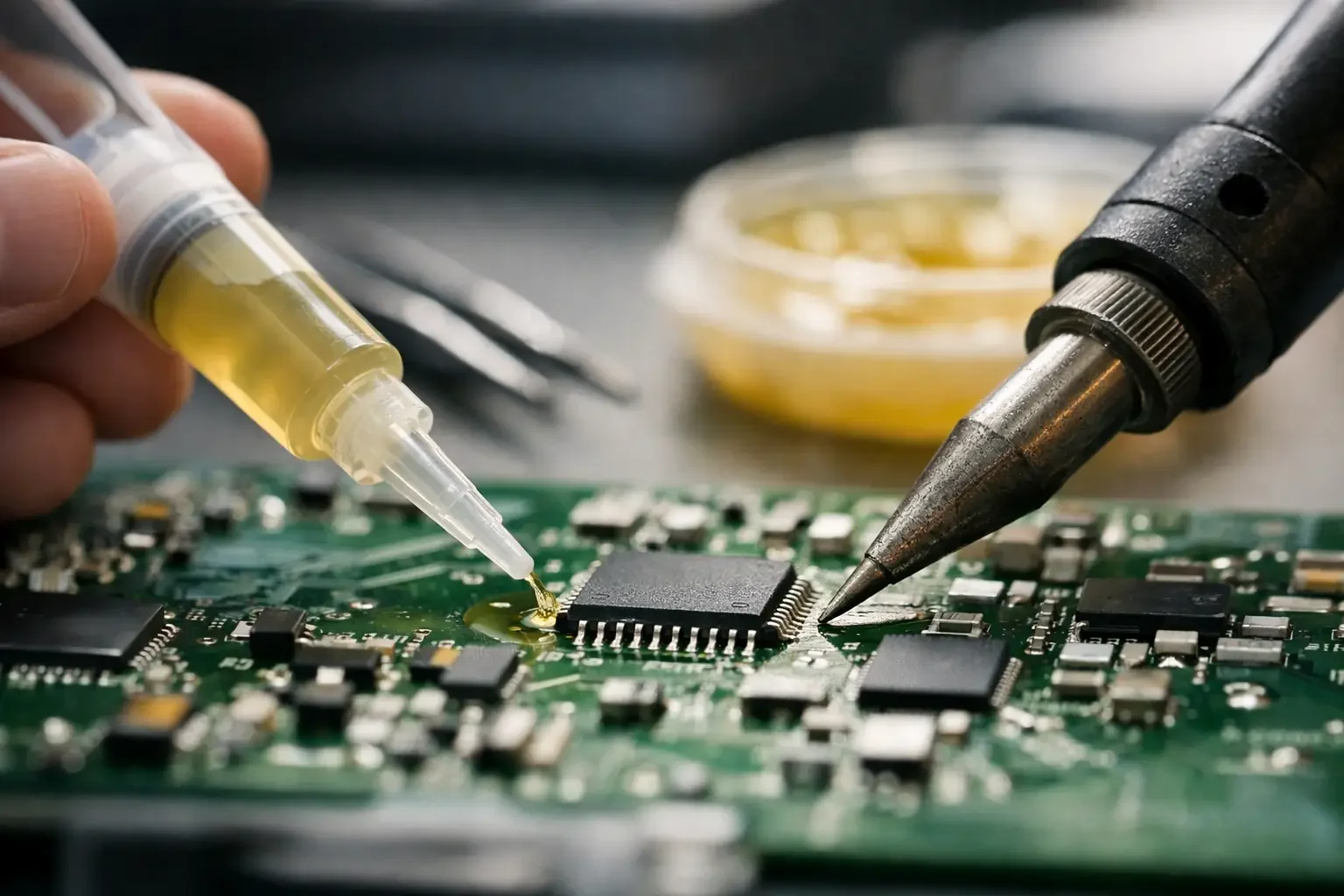
When it comes to using flux for micro soldering, the question is not whether it’s necessary—it's almost always needed. The key is to use the right amount, in the right place, and at the correct temperature. A well-chosen flux can enhance the wetting of solder, while excess can contaminate the area, obscure defects, or worsen visibility under a microscope.
In repairs on smartphone, iPad, or MacBook boards, flux is not an accessory; it's an essential material that directly impacts solder quality, thermal control, and the risk of bridges between closely placed pads. Therefore, it should be treated as a technical tool, not a product applied “by eye.”
How to Use Flux for Micro Soldering Without Common Mistakes
Flux serves three practical functions: it reduces oxidation during heating, improves solder flow, and aids thermal transfer to the work area. In micro soldering, this means one simple thing: the alloy melts and distributes better, with less mechanical stress on the pad and reduced need to insist with the tip or hot air.
The most common mistake is thinking that more flux equals more control. In fact, if the area is saturated, the solder can move less predictably, residues increase, and the final cleanup becomes slower. On fine-pitch components like FPC connectors, charging ICs, EEPROMs, or data lines, excess flux also worsens the optical readability of the joint.
The second mistake is using only one type of flux for every job. Not all works require the same viscosity. A reballing, tinning a torn pad, and repositioning a connector each require different approaches.
Which Flux to Choose Based on the Job
In practical work, three main families are used: gel, liquid, and paste. Gel is the most commonly used in micro soldering because it stays localized, doesn't easily escape under components, and allows for more precise dosing. It's suitable for connectors, small ICs, jumpers, charging pads, and localized repairs.
Liquid flux is useful when capillarity is needed, such as on very fine areas or in some rework processes where rapid distribution is desired. However, it must be managed more carefully, as it can spread beyond the intended area. In experienced hands, it is very effective, but on dense boards, it may not always be the most controllable choice.
Thicker formulations or pastes can work well in reballing or certain pre-tinning phases, but it depends on the alloy, temperature, and skill level. If the residue is too heavy, cleanup time increases, and the risk is that potential micro-bridges get covered.
The product’s chemistry also matters. A no-clean flux is handy when you want to reduce post-work cleanup, but it doesn't mean you should always leave residue behind. In board-level repairs, especially on devices exposed to moisture or with sensitive areas, thorough cleanup is often the more professional choice.
How Much Flux to Really Use
The correct amount is less than what many apply initially. On a single pad or small group of pins, a thin and even layer is sufficient. Flux should assist the soldering process, not create a pool.
For an FPC connector, for example, it’s enough to apply a small line of gel along the terminals. For an IC to be repositioned, a micro-drop can be applied on already prepared pads. If the product bubbles excessively during heating, expands a lot, or contaminates the surrounding area, it usually means too much has been applied.
A good operational reference is this: the flux must remain visible but shouldn't completely cover the pad profiles. If under the microscope you see only residue and can’t clearly distinguish the working geometry, the dosage needs to be reduced.
Preparing the Board Before Application
Before applying flux, the surface must be suitable for the intervention. If there are charred residues, oxidized solder, damaged solder masks, or contamination from glue and dust, flux won’t solve the problem; it merely makes it less visible for a few seconds.
The correct sequence is straightforward: inspection, initial cleaning, possible removal of old solder, checking the pads, and only then applying the flux. In the presence of lifted pads or fragile tracks, it’s advisable to minimize thermal passes. Flux helps, but it doesn't compensate for improper preparation.
On multilayer Apple boards or high-density boards, this phase is even more crucial. A well-prepared surface requires less heat, less mechanical contact, and fewer follow-up corrections.
Correct Technique with Soldering Iron and Hot Air
If you’re working with a fine tip, the flux should be applied before soldering or drag soldering, then evenly distributed. The tip must not dig into the pad; it should transfer heat and guide the alloy. When the flux is right, you'll see the solder gather and spread more evenly.
With hot air, the discussion changes slightly. The flux should not boil aggressively as soon as heating begins. If it does, the temperature is often too high or the airflow is too direct. In micro soldering, stability counts for more than perceived speed. A more controlled thermal profile reduces the risk of moving nearby components or stressing the board's resins.
For connectors and small ICs, it's often advisable to pre-treat the pads with a minimal amount of fresh alloy, apply flux, position the component, and finish the work with gradual heat. For jumpers on thin lines, however, the flux must remain extremely localized. If it spreads too much, wire handling becomes less precise.
How to Use Flux for Micro Soldering on Different Components
On single pads or test points, flux is mainly used to speed up wetting. Here, the main risk isn't bridging but excessive thermal permanence. If the alloy doesn't take right away, don’t just add more heat. Check the pad status, tip cleanliness, and surface quality.
On fine-pitch connectors, flux helps avoid dry and uneven solder joints. In this case, a medium or medium-high viscosity that stays on the row of pins is preferable. If you use too much product, you may achieve pins that appear soldered but are difficult to read during inspection.
For small and medium ICs, especially in rework, flux also aids alignment during reflow. It doesn’t replace proper initial positioning but helps the component sit better on the pads when the alloy liquefies.
In reballing, however, the choice highly depends on the type of stencil, the alloy, and the operator’s habits. An overly active flux can make results less clean. An excessively weak one may necessitate redoing the work. Here, repeatability of the process matters more than just the product.
Residues, Cleaning, and Final Checks
Even when using a no-clean flux, the final check shouldn't be skipped. Residues can hide micro-bridges, stray balls, or incomplete wettings. Under a microscope, a clean area reads better and allows for a real verification of the joint.
Cleaning should be done without aggressively attacking the newly soldered component. If the piece is still thermally unstable, it’s better to wait a moment. Excessive cleaning on delicate pads, freshly fixed jumpers, or small connectors may create more problems than the soldering itself.
For labs and technicians who work continuously, it’s wise to standardize the process: same type of flux for certain tasks, same dosage, same cleaning procedure, and the same final inspection. This reduces errors and makes results more predictable.
When Flux Alone Isn’t Enough
If soldering still doesn’t behave well, the issue may not be the flux. It could depend on a worn tip, real temperature being out of range, low-quality solder, oxidized pads, high thermal mass, or already compromised components. Attributing everything to consumables often leads to misdiagnosis.
The same applies to boards that have been repaired multiple times. In the presence of thinned tracks, stressed resin, or partially missing pads, even the best flux has limited effectiveness. In these cases, preparation of the point, choosing the right jumper wire, and reducing thermal stress matter more.
For those purchasing equipment and consumables professionally, it makes sense to treat flux as part of the process, not as a generic product. A coherent technical assortment among alloy, tips, desoldering braid, hot air, and cleaning materials affects more than one-off improvised interventions. This is also why specialized suppliers like iPhoneHospital.it are beneficial for those working daily on boards and high-density connectors.
Ultimately, the difference isn't made by the flux alone. It's how you integrate it into the process: little, precise, consistent with the work, and always verified under magnification. That’s when micro soldering stops being merely closed and becomes truly reliable.