


Where to Buy Compatible iPhone Displays
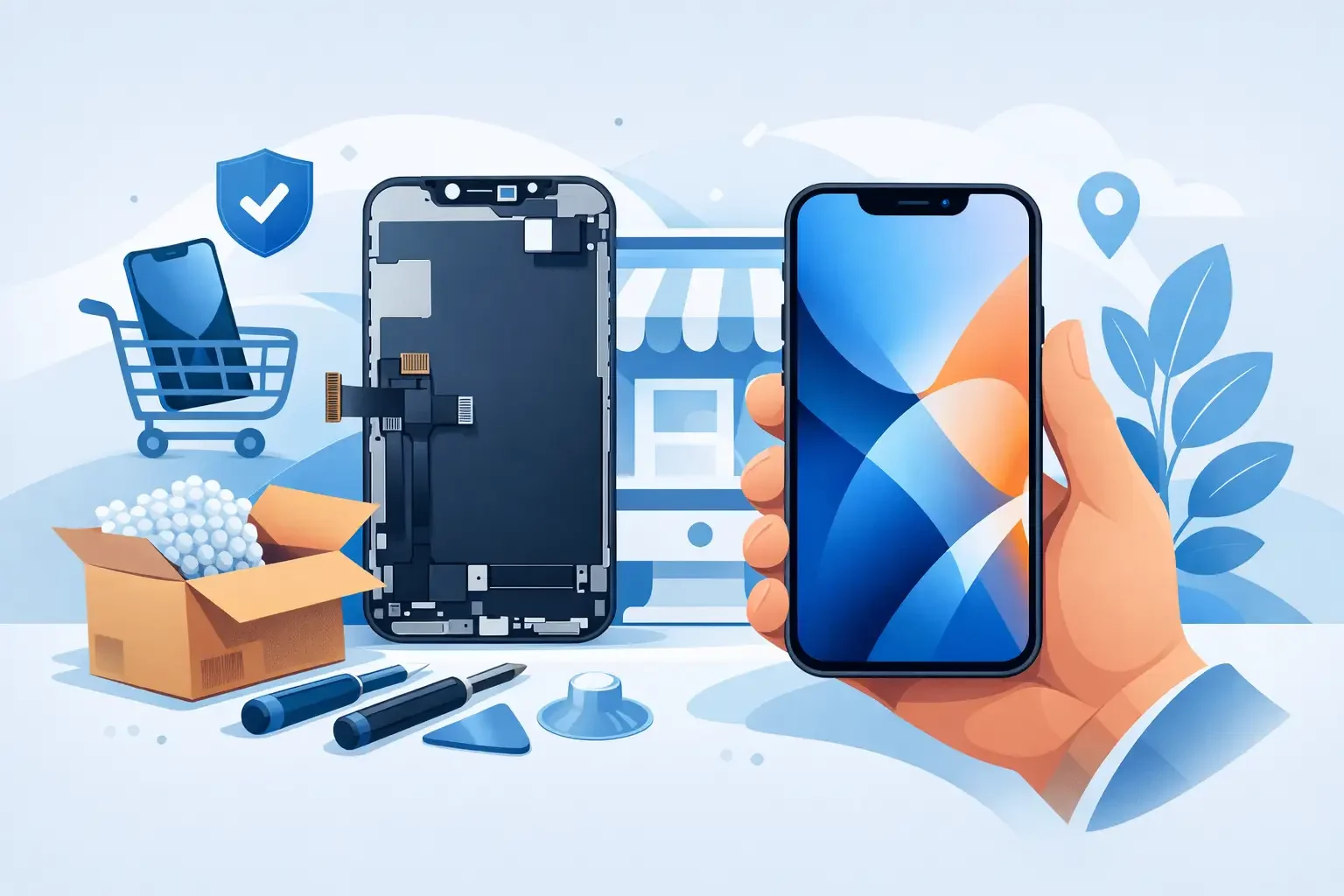
The problem isn't finding a display. The challenge is finding the right display, with the expected quality, for that specific model of iPhone, without wasting time navigating poorly declared compatibilities, incomplete codes, and parts that seem equivalent on paper but differ in practice. When asking where to buy compatible iPhone displays, the correct answer isn't a generic name; it's a supplier and component selection method.
For a technician, a lab, or an experienced user, buying a compatible display means reducing returns, reworks, and downtime. It also means managing the compromise between cost, color rendition, touch sensitivity, panel reliability, and immediate availability. A good purchase always starts from here.
Where to Buy Compatible iPhone Displays Without Mistakes
The first criterion is the vendor's specialization. A general e-commerce site may have a wide selection, but often lacks the classification level needed to distinguish between truly compatible variants and parts simply labeled as such. In the case of iPhone displays, the difference matters greatly: the same diagonal does not mean the same flat, the same technology, or the same result.
A reliable supplier must organize the catalog by exact model, device family, and type of replacement. This approach helps avoid the most common mistake in display repairs: purchasing a component that is only partially compatible, possibly mechanically mountable but not correct for performance, brightness, or function management.
The clarity of the product specification is also crucial. If the vendor does not precisely specify the supported model, the quality of the replacement, whether the frame is included, and the type of assembly, the operational risk increases. For those handling multiple repairs daily, any missing information translates into delays.
What Compatible Display Really Means
In the spare parts market, "compatible" doesn't always mean the same thing. In some cases, it indicates an aftermarket display designed to replace the original with similar specifications. In others, it identifies a replacement that meets lower standards, suited to keep the final repair cost down but not always aligned with the original visual and tactile experience.
This is why it’s wise to read the term technically, not commercially. A compatible display should be assessed on multiple levels: mount correctness, touch response, backlighting uniformity, color fidelity, viewing angle, glass treatment, and durability. Two compatible parts for the same iPhone can have significantly different performances.
If the end customer is looking for a cheaper repair, a good-quality compatible solution may make sense. However, if the device is new, used intensively, or meant for a professional context, the margin for compromise decreases. Here, price alone is not a sufficient criterion.
How to Evaluate a Supplier Before Purchase
A serious supplier can be recognized by how they present spare parts. Organization by model should be clear, without ambiguity between similar versions. It’s also helpful to have parallel categories for tools, adhesives, double-sided tapes, seals, and accessory components because those who repair know that just having the display rarely suffices to complete the job correctly.
Another concrete signal is the depth of the catalog. If the vendor treats the Apple ecosystem and lab components in a structured way, they are more likely to understand the differences between various replacement lines and not simply reselling indistinct products. In this context, specialized entities like iPhone Hospital align with the needs of labs and technicians who purchase routinely.
Continuity of availability is also critical. A good supplier doesn’t just serve when the price is right but allows reordering the same quality standard over time. For a service center, this is essential: changing the type of display with every purchase makes the final result less predictable and complicates customer expectation management.
Technical Sheet, Photos, and Description Matter More Than Initial Price
A well-constructed product sheet helps determine if the display is pre-assembled, includes small pre-mounted components, is available with or without a frame, and which quality segment it covers. Photos should be consistent with the actual product, not generic. The description should speak the language of repair, not pure promotion.
When this information is lacking, the risk is spending less on purchase but more on the bench. A poorly mounted display or an inconsistent touch can turn a quick intervention into a customer return or a new replacement at the lab’s expense.
Model Compatibility: The Most Costly Mistake
For iPhones, model verification needs to be strict. It’s not enough to know it’s an iPhone 11, 12, or XR. You must confirm the exact variant and compare it with the coding of the replacement part. In many repairs, the component is searched for in a hurry, especially when the damage is evident and the customer expects quick turnaround times. This is where errors often creep in.
Real compatibility concerns connectors, display group structure, frame, possible production differences, and the quality of the integrated components. Furthermore, on modern Apple devices, aspects related to the transfer of original components and management of certain functions come into play, which should not be underestimated during estimates.
For this reason, a catalog organized by specific model is not an aesthetic detail. It is an operational tool. It reduces picking errors, accelerates selection, and simplifies standardizing lab work.
Economical Display or Superior Quality Display?
There is no single answer here. It depends on the device, the customer’s budget, the usage type, and the positioning of the lab. An entry-level compatible display may be suitable for an older iPhone or for a repair where price is crucial. However, on more recent devices, low quality is immediately noticeable: reduced brightness, colder colors, less precise touch, different consumption, and an overall less convincing feel.
For a technician, the point isn’t to always sell the most expensive replacement. The point is to propose the replacement that aligns with the intervention. If the customer is willing to accept a quality compromise to keep costs down, the choice is legitimate. If, however, they expect a performance close to the original, the compatible display must fall within an adequate range. The mistake occurs when these two factors are not aligned.
The Real Cost is Measured After Installation
A cheaper display is not automatically more cost-effective. If it exhibits uniformity defects, complex installation, a higher return rate, or lower durability, the final cost increases. This is even more significant for those managing consistent repair volumes.
Because of this, professionals tend to choose suppliers who maintain a recognizable quality line. Paying a bit more for a stable replacement often means saving time, avoiding complaints, and protecting the margins of the work.
What to Check As Soon As the Display Arrives
Before final installation, the display should always be verified. It’s a simple practice, but often overlooked when there’s rush to deliver. Preliminary checks reduce disputes and make it possible to quickly identify any anomalies.
It’s advisable to test power-up, touch response, image uniformity, brightness, presence of dead pixels, and overall correct behavior before completing assembly. In structured labs, this phase is standard. In occasional purchases, however, it is often skipped, resulting in attributing problems to the installation that were actually present on the part.
The packaging also reflects something about the supplier. A delicate component like a display must arrive adequately protected. If packaging and handling are sloppy, the risk of micro-damage or problems not immediately visible increases.
Where is It Worth Buying?
If the goal is to save a few euros occasionally, any marketplace may seem sufficient. However, if the goal is to purchase the correct component, with clear classification, consistent availability, and a catalog designed for repair, it’s better to turn to a supplier specialized in spare parts and technical equipment.
The difference lies in the approach. A repair-focused seller doesn’t just offer a “display for iPhone.” They structure the catalog by model, segment the quality of the replacement, provide tools and useful materials, and cater to an audience that needs to complete an intervention, not just make a generic purchase.
Therefore, when evaluating where to buy compatible iPhone displays, don’t start with the lowest price. Start with the accuracy of the catalog, the quality of the information, and the supplier's ability to support a repeatable purchase. The right display is not just one that fits into the frame. It’s one that prevents you from having to do the job again.
Useful Spare Parts and Tools: Laboratory Accessories