


Aftermarket iPhone Parts Trends 2026 and Repairs
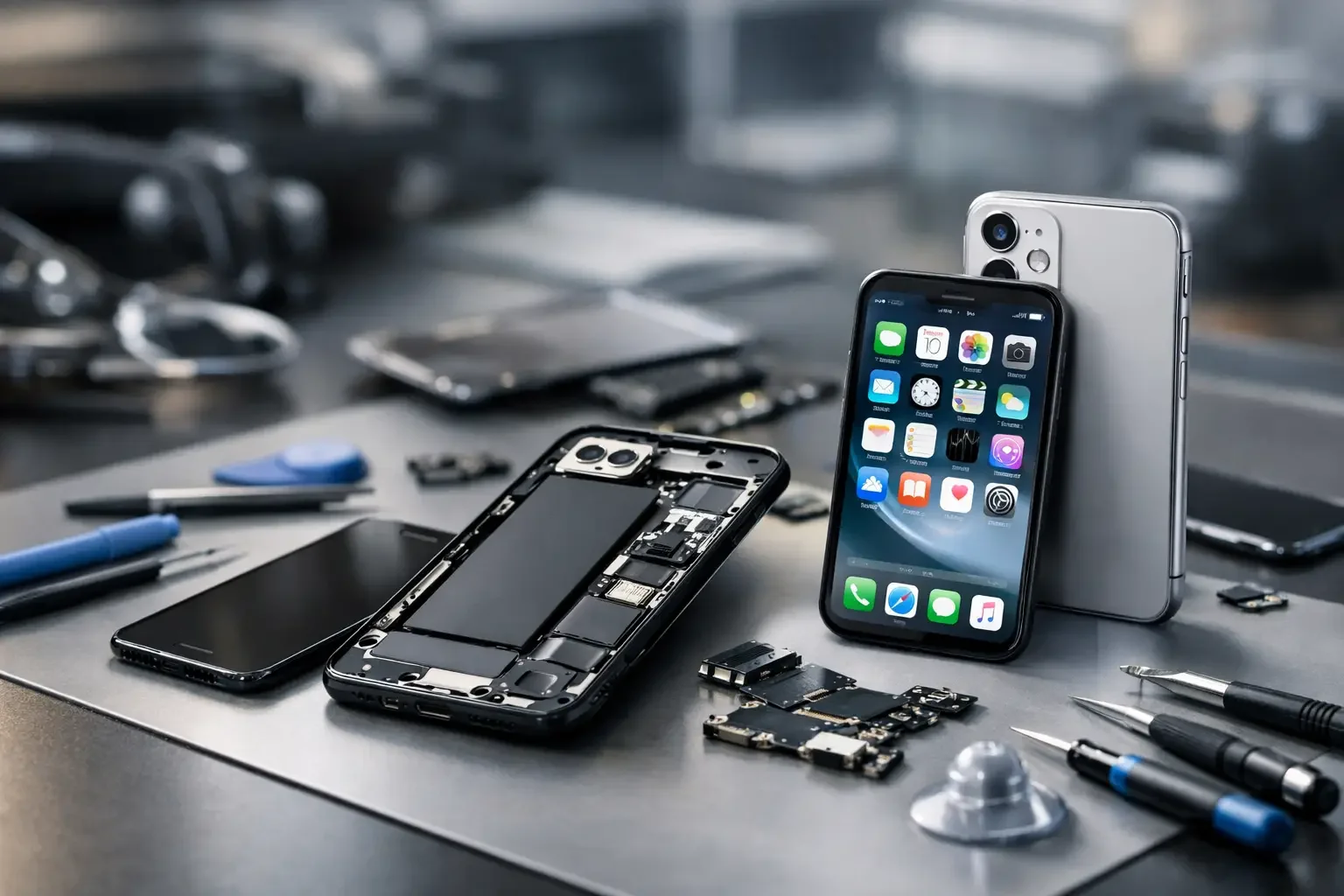
A display that lights up but doesn’t maintain automatic brightness, a battery with unstable percentage, or a camera that returns an unrecognized component warning: in 2026, repair success is no longer just about assembly. The aftermarket iPhone parts trend for 2026 mainly concerns the ability to select components consistent with the model, device version, and customer expectations.
For workshops, service shops, and independent technicians, the aftermarket market continues to be an indispensable operational resource. The availability of alternative spare parts, varied quality, and components for older models enables sustainable repairs. However, this choice requires a more technical understanding beyond mere declared compatibility.
Aftermarket iPhone Parts Trend 2026: Market Drivers
The first trend is the continued use of iPhones. Many users choose to replace the battery, display, charging connector, or camera module instead of purchasing a new device. This extends the lifecycle of even older generations and keeps demand high for components of models that are no longer at the forefront of retail sales.
The second trend is the segmentation of quality. The generic term "compatible" is no longer sufficient, as displays, batteries, and small components can vary significantly in visual performance, touch response, energy consumption, longevity, and assembly precision. A workshop working on volume must be able to decide which quality tier to offer based on repair type, customer budget, and warranty intentions.
The third trend concerns software-hardware integration. Apple has increased checks related to component identification and configuration. A replacement may be physically correct and fully functional but require additional procedures or present limitations related to specific functions. Thus, in 2026, checking the exact model and device configuration is an integral part of the estimate.
Aftermarket Displays: Quality Before Final Testing
The display remains the replacement with the most impact on customer perception. It’s not enough to verify that the panel lights up and the touch responds: anyone using an iPhone daily will immediately notice differences in brightness, color temperature, outdoor readability, scrolling fluidity, and panel uniformity.
For models with OLED technology, selecting the component requires special attention. Different aftermarket tiers can have less deep blacks, higher consumption, lower brightness, or color reproduction far from the replaced panel. In some cases, the compromise is acceptable, for instance, for a budget repair on an older device. In others, particularly for high-end models and demanding customers, a higher-quality panel reduces disputes and returns for assistance.
Before final closure, it’s useful to perform a complete test: touch across the entire surface, proximity sensor, front camera, ear speaker, brightness, colors, True Tone where applicable, and display response after several minutes of use. A quick bench check costs less than a re-opening of the device.
An Already Assembled Frame Reduces Time and Variables
The availability of displays with frames can simplify many processes. A pre-assembled component reduces the transfer of parts from the old frame, limits the risk of damaging seals, brackets, or delicate flex cables, and makes the intervention time more predictable. It’s not always the most economical solution, but it can be the most efficient for a lab that needs to maintain quick delivery times.
Aftermarket Batteries: Capacity, Safety, and Real Data
The battery remains one of the most sought-after spare parts but also one of those where it's easiest to create false expectations. A high nominal capacity alone does not guarantee a good user experience. The quality of the cells, stability of delivery, performance under load, protection electronics, and construction precision matter.
In the 2026 trend, there is a growing focus on reliable batteries for real usage cycles, not just commercial specifications. For a technician, this means preferring components with precise connectors, appropriate adhesives, correctly positioned flex cables, and protections consistent with the model. An inexpensive yet unstable battery can turn a simple repair into a new appointment for shutdowns, overheating, or insufficient autonomy.
It should also be clarified to the customer that some information displayed by iOS, including battery status or component detection, may depend on the iPhone generation and the procedures executed. Promising complete software behavior equivalence without verifying the specific case is a commercial mistake before it is a technical one.
Associated Components and System Messages: How to Manage Estimates
Cameras, displays, batteries, and biometric modules are categories that require greater caution. Face ID, in particular, should not be treated as an interchangeable component without evaluating the integrity of the original modules associated with the device. Even minimal damage to flex cables, sensors, or front groups can compromise functions that the customer considers essential.
The correct procedure begins with diagnosis. Before ordering a replacement or opening the device, one must check which functions are already active, what messages are present, and if the damage is limited to the visible component. An iPhone with a broken display may also have a distorted frame, a damaged sensor, or a loose connector after a fall.
In the estimate, it’s useful to distinguish three elements: the physical replacement of the part, the restoration of testable functions, and any software notifications or limitations related to component association. This clarity protects the workshop and allows the customer to consciously choose between a budget repair and a higher-tier solution.
Spare Parts for Recent and Older Models: Assortment Matters
A common mistake is to focus procurement solely on recently released models. The most common iPhones in workshops are often those a few years old: they are out of warranty, maintain adequate performance, and have residual values that justify new displays, batteries, or back covers.
The availability of specific models thus remains crucial. Charging connectors, cameras, side buttons, speakers, vibrations, flex cables, adhesives, and screws must be identified without approximations. Minimal differences between variants can render a part unusable or unnecessarily prolong the device's downtime.
For those managing recurring repairs, having a reasoned assortment of high-turnover components and a supplier with categories organized by family and model reduces purchase errors. iPhoneHospital.it meets this need with a selection focused on spare parts, batteries, and the tools necessary for laboratory work.
Tools and Consumables Become Part of the Final Quality
The correct spare part does not compensate for a procedure performed with unsuitable tools. In 2026, the value of reliable bench equipment increases: controlled hot air stations, power supplies, microscopes, magnetic mats, sets of precision screwdrivers, adhesives, sealants, and systems for keeping screws organized.
This is particularly evident in repairs involving rear glass, connectors, charging boards, and glued modules. The risk does not only concern immediate damage. Uncontrolled temperatures, insufficient adhesives, or incorrect pressures can generate problems days later, when the customer has already collected the phone.
Investing in appropriate consumables also improves process consistency. A workshop using the same cleaning, sealing, and final testing procedures on every intervention can more easily identify anomalies and maintain repeatable standards among different technicians.
How to Choose an Aftermarket Spare Part in 2026
The correct question is not "what is the cheapest spare part?", but "what is the suitable spare part for this repair?" The answer depends on the model, the involved function, the required quality level, and the device's residual value.
Before purchasing, checking the model code, exact variant, and detected defect avoids incorrect orders. Subsequently, it’s advisable to assess the component tier, whether the frame is included, transfer elements, possible software implications, and the time necessary for testing. For a battery, the focus will be on stability and correct installation; for a display, on performance and accessory functions; for a connector, on contact quality and data charging test.
The aftermarket market will continue to grow because repair remains a practical choice for users and businesses. The technician's competitive advantage won’t just be finding a compatible part but delivering a controlled iPhone, consistent with the estimate, and ready to return to daily use without surprises.