


iPhone Back Glass Replacement: How to Choose It
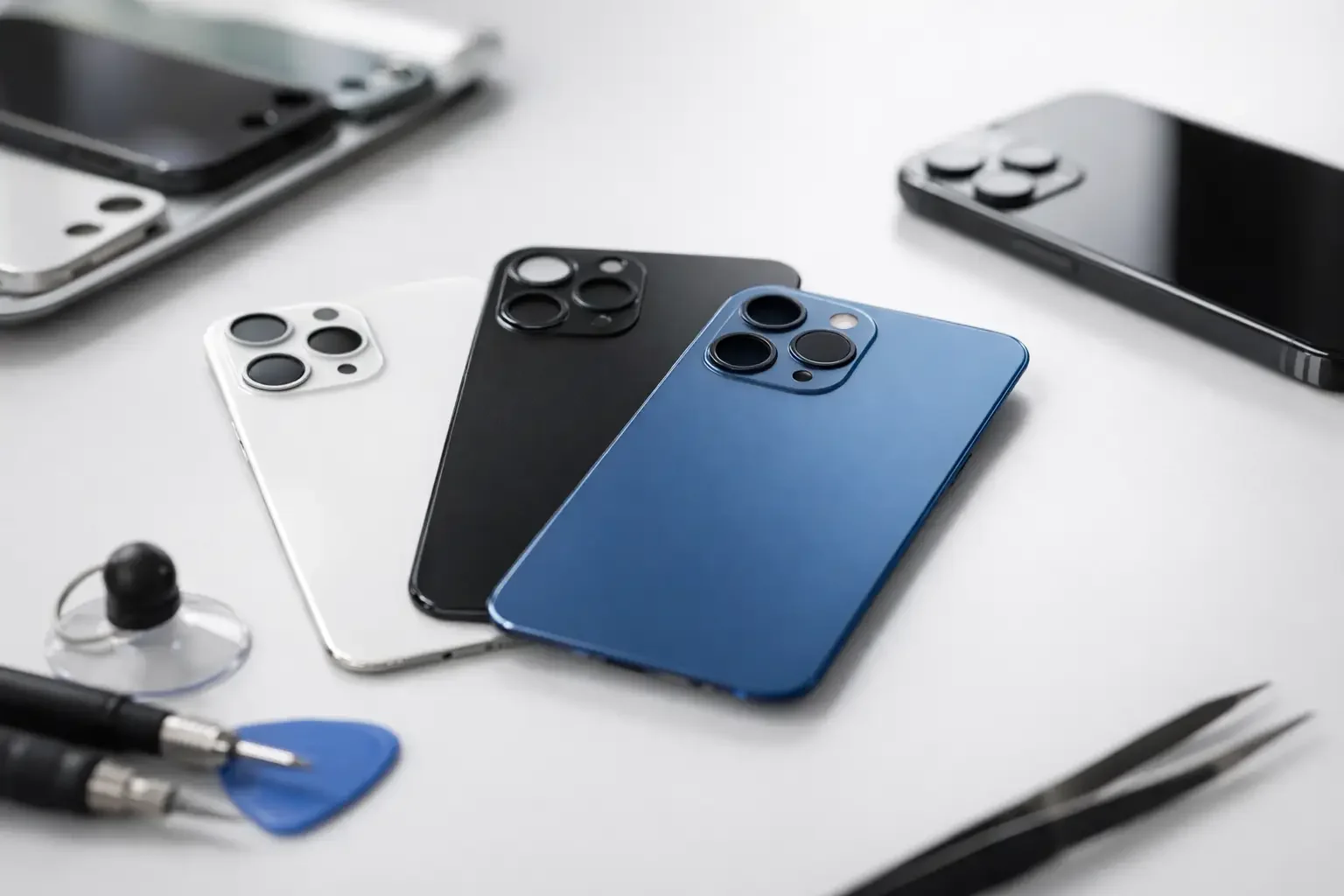
When an iPhone with a broken back arrives at the shop, the issue is not just aesthetic. Choosing the right iPhone back glass replacement is crucial because compatibility, finish, and component quality affect repair time, final results, and the risk of rework.
On the latest Apple models, the glass back is an integral part of the design, but also one of the most exposed areas to impacts, twists, and falls. For repair professionals, this means one thing: it's not enough to find a "compatible" part. It’s necessary to identify the correct replacement for the series, year, component arrangement, and intended installation method.
iPhone Back Glass Replacement: They're Not All the Same
There are significant differences in the market between one back glass and another. Variations exist in cut, precision of holes, pre-installed adhesive, internal paint quality, and color consistency compared to the original. In some models, even a slight tolerance outside specifications can create issues with fitting to the frame, cameras, or MagSafe modules.
For this reason, it’s always best to start with the exact model before purchasing. Simply stating “iPhone 12” or “iPhone 13 Pro” is not a detail; within the same family, layout differences can render a seemingly similar replacement unusable. An experienced technician knows this well, but it remains a central point for the advanced user purchasing independently.
Then there’s the issue of piece configuration. Some replacements are supplied as just the back glass, while others come as a complete shell or housing with pre-installed components. The choice depends on the type of damage and the organization of the repair bench. If the frame is intact and only the outer part needs addressing, replacing the glass can be the most efficient solution. If the deformation involves the frame, internal supports, or camera alignment, replacing the complete shell can reduce time and unforeseen issues.
When to Replace Only the Back Glass
Replacing only the back glass makes sense when the damage is localized and the device’s structure shows no deformation. Essentially, if the frame is straight, the internal modules are properly seated, and there are no issues with the camera lens, wireless charging, or overall closure, glass replacement allows for targeted restoration of the device.
This solution is often adopted in shops equipped for removing damaged glass and managing adhesives. The operational advantage is clear: lower component cost and preservation of the original structure. The limitation is that the procedure requires precision, time, and accurate initial assessment. If the frame is even slightly compromised, the risk is achieving less-than-perfect assembly or having to reopen the job.
On newer models, the glass back can be strongly integrated with the camera area and internal thermal management. This makes it even more important to verify whether the damage is truly superficial or if it has already affected elements that make it more rational to opt for a complete solution.
How to Choose the Right Replacement by Model and Finish
Selecting the right component starts with three checks: exact iPhone model, color, and piece configuration. These may seem like trivial steps, but they help avoid the most frequent ordering errors.
The model must be identified without approximations. It's not enough to know the commercial generation; you must differentiate between standard, Pro, Pro Max, Plus, Mini, and close series variants. An iPhone 12 cover is not automatically compatible with the 12 Pro, even if they may appear similar in size.
Color matters more than it seems. In Apple back glasses, finishes are not merely aesthetic: tone, opacity, reflection, and surface treatment impact the qualitative perception of the repair. A final customer will quickly notice a color discrepancy, especially on models with satin finishes or special hues.
Lastly, there is the configuration of the replacement. Some technicians prefer glasses with pre-applied adhesive to speed up work and standardize assembly. Others choose bare components and manage adhesives, glues, or consumables separately depending on their procedure. Neither approach is always better; it depends on the shop's operational flow and the level of control required.
iPhone Back Glass Replacement and Build Quality
The quality of this component is immediately visible, but it is measured especially after assembly. A well-made replacement offers precise alignment, clean edges, uniform painting, and holes consistent with the model. A mediocre component can create issues with support, incomplete adhesion, or difficult-to-accept visual flaws on a premium device.
For a service center, quality is more than just an aesthetic issue. A poorly installed back glass or one with weak tolerances increases the risk of disputes, returns, and wasted time. Even when the customer accepts a non-original repair, they still expect an orderly, stable result consistent with the value of the iPhone.
The context of the repair must also be considered. For a device intended for resale, the required aesthetic standard can be quite high. For a daily use terminal, the customer might prioritize speed and cost containment. Thus, the correct replacement is not always the cheapest or the most comprehensive; it’s the one suited to the actual repair scenario.
Tools and Materials: The Right Piece Alone Is Not Enough
Anyone working on the back of iPhones knows that the replacement is only part of the job. Successful results also depend on tools, technical consumption, and the method of processing. Removing residues, cleaning the frame, managing heat, and applying adhesive require equipment consistent with the type of model being handled.
A well-structured shop tends to handle this repair with a process logic, not improvisation. Having tools, adhesives, technical blades, pliers, supports, and bench materials handy reduces errors and speeds up job closure. No wonder those who regularly purchase replacements tend to centralize the supply of tools and workshop accessories as well.
For those working across multiple Apple families or dealing with other brands, organizing purchases by technical department can be beneficial. In this sense, an orderly structure of categories helps greatly, both for components and work materials. On iPhoneHospital.it, for example, those searching for Apple smartphone components can navigate to the iPhone Parts section, while equipment and consumables are more functionally organized under the Laboratory Accessories category.
When to Consider a Complete Shell Instead of Just the Glass
There are cases where insisting on only replacing the back glass doesn’t make sense. If the frame is bent, internal supports are compromised, or the camera group doesn’t seat properly, the risk is spending more time for a lesser result. In such situations, opting for the complete shell can be the more efficient choice.
It’s true that the component cost rises and transferring components requires more steps. However, you gain in structural precision and reduce the likelihood of imperfect closures. For a shop that needs to maintain consistent standards, this economic assessment should be based on actual bench time, not just the price of each individual replacement.
The level of damage around the rear lenses is also crucial. If the impact has affected frames, housings, or support surfaces, simply replacing the glass might not solve the problem. It's best to verify immediately and set the quote based on the most solid solution.
Common Mistakes During Purchase
The most common mistake is ordering based on visual similarity. This often occurs between consecutive models or versions of the same series. The second mistake is neglecting the color, assuming that a minimal difference is insignificant. It might pass at the shop, but it’s much less acceptable in front of the customer.
Another critical point is underestimating the type of intervention required. Purchasing a back glass when the phone actually needs a complete shell leads to stopping the repair, generating a second order, and extending timelines. The opposite also holds true: choosing a more complex component than necessary can unnecessarily inflate labor costs.
To avoid these issues, it’s advisable to always conduct an initial technical check: model identification, frame geometry check, camera area analysis, and definition of the assembly procedure. It’s a simple routine, but it significantly reduces procurement errors.
A Correct Purchase Saves Time Before Money
In repair work, the right replacement not only serves to complete the job but also ensures it is done without delays, forced adjustments, or having to correct defects after assembly. This aspect weighs even more on back glass, as the result is always highly visible.
This is why it’s important to treat the iPhone back glass replacement as a technical component, not just a simple aesthetic accessory. Choosing the precise model, assessing the level of damage, and using materials consistent with the procedure means working better and delivering a cleaner, more stable, and more credible device to the final customer.
When the part is correct from the start, the bench operates more smoothly. And this is often the real margin that makes a difference in a shop.