


OLED vs LCD iPhone Display: What's the Difference
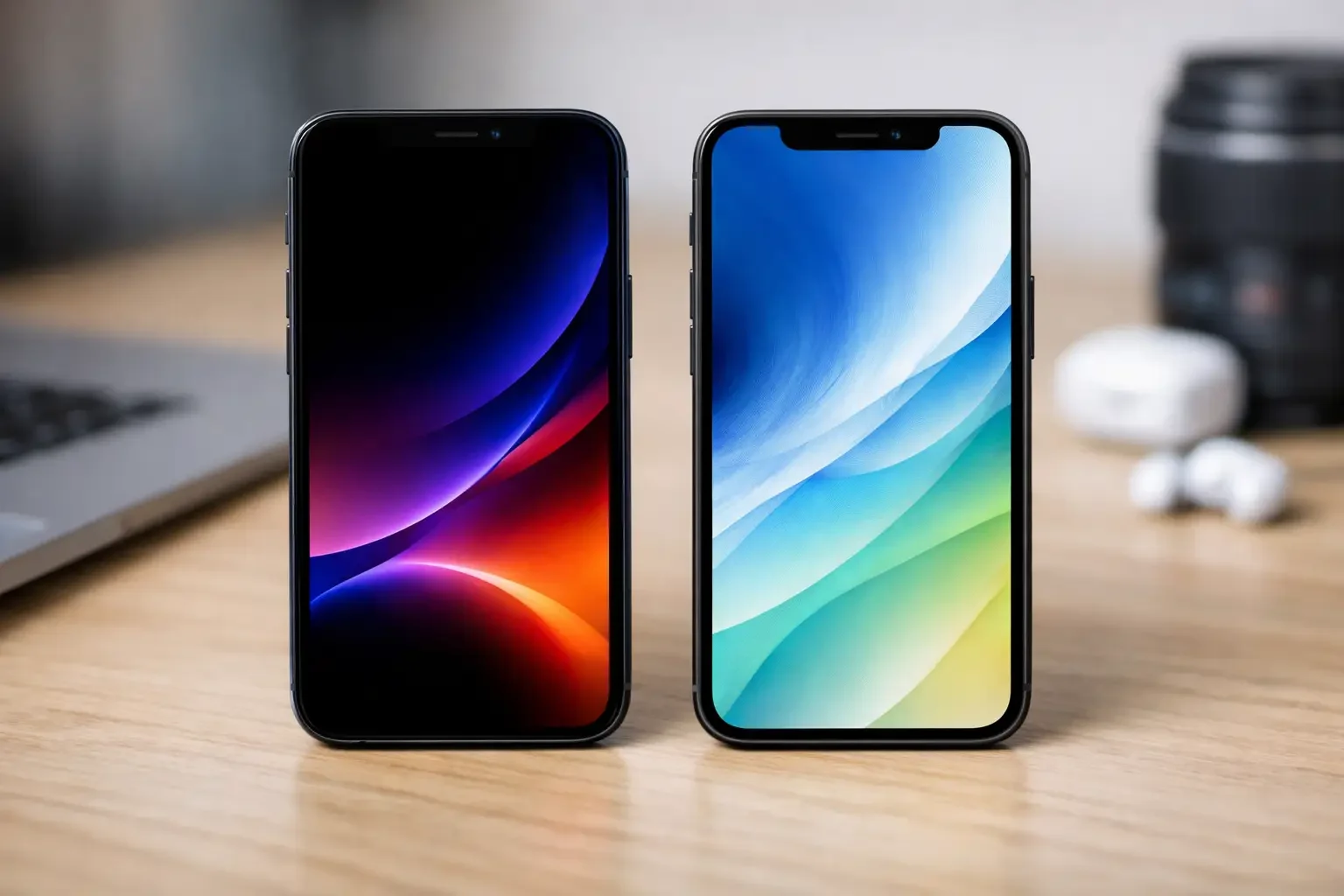
When replacing a screen, the comparison between an OLED display and an LCD iPhone becomes immediately practical. The difference is seen in installation, final repair cost, visual performance, and customer expectations. For workshops or individuals purchasing a replacement independently, choosing the correct panel helps to avoid disputes, returns, and substandard results.
OLED Display vs LCD iPhone: Real Technical Difference
The basic distinction is simple. An LCD display uses separate backlighting: liquid crystals modulate light produced from a rear layer. An OLED display, however, emits light pixel by pixel. This detail directly alters the behavior of the panel.
With OLED, black is deeper because pixels can turn off completely. The perceived contrast is superior, particularly on dark interfaces, always-on screens, and video content. The module's thickness can also be less since a traditional backlighting system is not needed.
In contrast, the LCD structure is different, leading to blacks appearing grayer due to the presence of backlight. However, well-calibrated aftermarket LCD replacements can result in adequate and stable brightness in very bright environments, usually at a lower replacement cost.
For repair professionals, the point is not to determine which technology is better overall. The key is understanding which solution aligns with the specific iPhone model, budget, and required quality level.
Which iPhones Have OLED and Which Have LCD
Compatibility always starts with the model. Not all iPhones use the same display technology, so the first check is the exact identification of the device.
Older iPhones such as the iPhone 6, 6s, 7, 8, XR, and 11 use LCD panels. From the iPhone X family onwards, with some well-known exceptions, Apple has extensively introduced OLED panels in many models, including X, XS, 11 Pro, 12, 13, 14, and various Pro versions.
This impacts in two ways. The first is the mechanical and electronic compatibility of the replacement part. The second is the user’s expectation: a customer transitioning from an iPhone originally equipped with OLED will immediately notice a downgrade to LCD, especially regarding black levels, contrast, viewing angles, and brightness handling.
In a technical sale, the right criterion is not just "it works," but "it restores the level expected from the device." This is where the distinction between compatible parts, equivalent OEM quality, and budget solutions becomes crucial.
OLED or LCD on iPhone: What Changes in Daily Use
In practical use, OLED offers a more authentic visual impact on models that come equipped with it. More vivid colors, deeper blacks, and improved contrast perception are the most evident advantages. Viewing photos and videos generally appears clearer with a more modern aesthetic response.
However, LCD remains a practical choice for many repairs. If the goal is to get the device working with lower expenditure, a good LCD can be sufficient, especially for phones intended for secondary use, basic resale, or customers prioritizing price over image fidelity.
Another often-overlooked aspect is the customer's sensitivity to visual details. Not everyone perceives differences in color temperature, black depth, or panel uniformity equally. A technician will notice these factors immediately and should communicate them clearly before installation.
Thus, in the quotation phase, it’s advisable to explain whether the replacement maintains the original display technology or represents an alternative solution. Clear communication prevents disputes after delivery.
Replacement Costs and Operational Convenience
Price is the most influential factor in decision-making. Generally, OLED costs more than LCD. This is true for both the component and the total repair cost, especially when working with high-end, tested modules with consistent quality.
However, the lowest price doesn't always correspond to the least cost. If an LCD installed on an iPhone that originally had OLED results in dissatisfaction regarding brightness, tone, or perceived glass thickness, initial savings may lead to post-sale support, replacements, or negative reviews. In a workshop, these indirect costs accumulate.
Conversely, proposing an OLED when a customer uses the device for work, photos, videos, or many hours daily is often the most logical choice. It reduces the risk of complaints and brings performance closer to the original.
For a retailer or service center, true convenience lies in offering a segmented choice. Keeping both LCD and OLED options available, when the model allows, helps cover different spending ranges without losing orders.
iPhone Repair: When to Choose OLED
Choosing OLED makes sense when the device was originally designed with OLED, and coherent performance with the original is desired. This is most common with mid-high range or newer iPhones, where the display significantly affects user experience.
It also makes sense when the customer is attentive to visual quality, utilizes dark mode, consumes a lot of multimedia content, or easily notices contrast differences. In such cases, offering an LCD simply to lower the quote may turn into an unstable solution.
Another typical scenario is when reselling a premium device. An iPhone with a well-installed OLED screen and correct performance aligns better with the expected product value. While it doesn’t eliminate all factors to consider, it aids in maintaining a higher perception of the terminal.
When an LCD Remains a Valid Choice
LCD remains sensible when budget is the primary constraint. For older devices, corporate phones, secondary units, or repairs meant to extend the terminal's life without significant investments, LCD solutions are often the most pragmatic.
It’s also suitable when the customer explicitly requests the minimum functional repair. In this case, the technician's role is not to push the most expensive solution but to clarify the compromise: the touch may be normal, the display fully usable, but the final output will not match that of an original OLED.
For some models that were originally LCDs, the issue doesn’t even exist in terms of upgrades. It's more important to choose a replacement with good quality control, appropriate brightness, stable touch response, and reliable assembly.
Critical Factors to Consider Before Purchase
In the OLED vs LCD iPhone comparison, one shouldn’t stop at the stated technology. The actual quality of the replacement matters. Two panels both labeled OLED can have significant differences in brightness, uniformity, consumption, white tone, touch sensitivity, and long-term reliability.
The same applies to LCDs. A budget panel might function but could have imperfect frames, abnormal absorption, cold color rendering, or visible defects under bright light. For those working in the repair sector, batch consistency and quality reliability matter almost as much as price.
Also consider the programming and component transfer needs, where necessary, to maintain certain functions or reduce system messages. This issue does not pertain only to the display itself but affects the entire replacement process. A good component installed poorly or without the correct procedure remains an incomplete repair.
This is why a structured technical supplier makes a difference. It’s not only about catalog availability but also about clear classification by model, readable specifications, and a range that distinctly defines various quality segments. In an operational context like iPhoneHospital.it, this approach helps in selecting the right replacement without wasting time on ambiguous compatibility.
How to Explain the Difference to the Customer Without Complicating the Quote
Those working at the counter know that customers do not want a lesson on display technology. They want to understand two things: how much they will spend and what result they will get. The most effective explanation is direct.
If the phone comes with OLED, present OLED as the solution most faithful to the original, and LCD as a more economical alternative with lower visual outputs. If the phone comes with LCD, focus instead on the quality of the replacement and the reliability of the installation.
This clarity reduces the risk of misunderstanding expectations. It’s a straightforward step, but especially useful in cases where customers are comparing significantly different prices online without realizing the clear differences in technology or quality segments behind them.
The right choice isn’t always the most expensive or the cheapest. It’s the one suitable for the model, intended use, and required outcome level. When the replacement aligns with these three factors, the repair goes smoother, the margin stays healthier, and the customer understands why they are paying for that specific component.