


Original vs Compatible iPhone Batteries
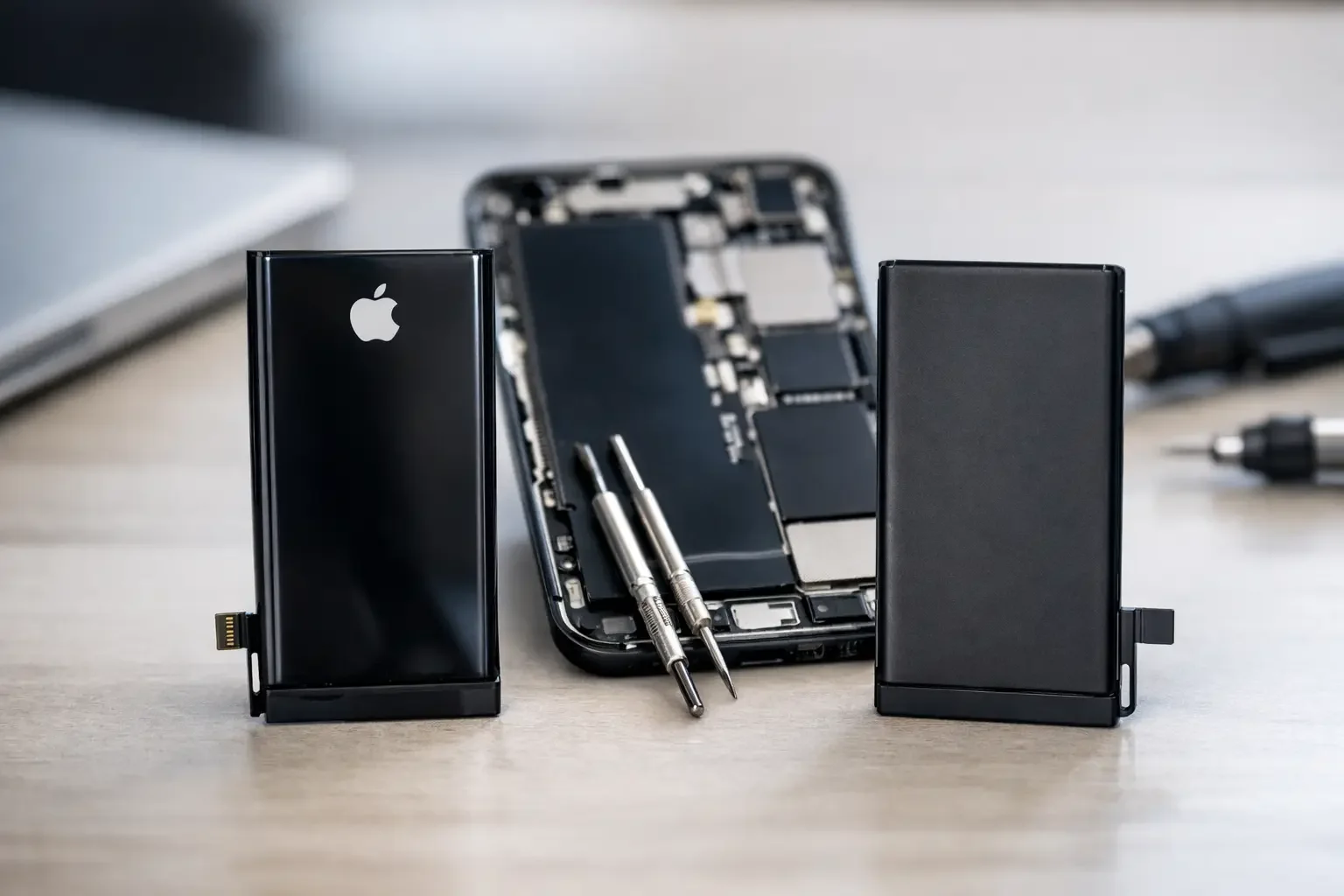
When an iPhone arrives at the shop with reduced battery life, random shutdowns, or temperature spikes, the real question isn't just which battery to install, but what result is desired after the repair. The comparison of original vs compatible iPhone batteries should be viewed as a balance between reliability, availability of the replacement, budget, and customer expectations.
In the repair industry, this distinction matters because the battery isn't just a consumable part. It affects stability, energy management, user experience, and, in newer models, even the appearance of system messages related to component verification.
Original vs Compatible iPhone Batteries: What Really Changes
The main difference lies not only in the “original” or “compatible” label. Supply chains, quality control, device integration, and predictability of performance over time all change.
An original Apple battery, or an OEM replacement from a compliant supply chain, is designed to meet electrical and construction parameters aligned with the device's original specifications. This means tighter tolerances on actual capacity, thermal response, protection circuitry, and communication with the logic board.
A compatible battery, on the other hand, is manufactured by third parties. The point is not to say that they are automatically inferior. There are well-constructed compatible batteries and cheaper ones with inconsistent performance. For a technician, the difference is seen in the return rate, stability of voltage under load, retention after a few months, and quality of integrated electronics.
For this reason, the “compatible” category is too broad to be judged as a whole. A selected compatible battery from a reliable technical supplier can be a good solution in many interventions. A generic compatible battery, lacking clear specifications, often ends up being a hidden cost in returns, disputes, and new device openings.
Cell Quality, Electronics, and Life Cycles
The first technical element to evaluate is cell quality. Declared capacity and actual capacity do not always match. On paper, two batteries may report the same mAh, but in daily use, energy density, stability during absorption peaks, and degradation after initial cycles can change.
A well-constructed battery maintains a more linear performance. The device doesn’t drop abruptly from 20% to shutdown, doesn’t suffer significantly under stress, and doesn’t generate charging anomalies. In models with more power-hungry processors, these differences become apparent quickly.
Then there’s the BMS, or battery management and protection circuit. This plays a crucial role in the comparison between original and compatible iPhone batteries. If the circuit is well-designed, charging is managed correctly, over-voltage protection is reliable, and communication with the system remains stable. If poorly designed, abnormal overheating, inconsistent percentage readings, or unsatisfactory duration can arise even with decent cells.
For a workshop, the most useful figure isn’t the unit price, but the real cost over the complete cycle: purchase, installation, initial defect rate, performance within 3-6 months, and post-sale support.
“Unknown Part” Message and Battery Status
On newer iPhone models, the issue isn’t only performance-related. Apple has introduced component verification mechanisms that can generate notifications such as “Unable to verify that this iPhone has an original Apple battery.” This happens even when the replacement battery functions properly from an electrical standpoint.
For the end customer, the message can be perceived as a defect, even if the phone charges and the battery life is good. For the technician, however, it’s a point to explain before the intervention. A compatible battery might be valid, but in some models, it doesn’t prevent the “unrecognized component” notification and might limit the proper display of battery status in settings.
Here, commercial clarity is essential. If the customer demands maximum software integration, absence of messages, and performance closely aligned with the original configuration, the choice of replacement should be assessed with that goal in mind. If, on the other hand, restoring battery life and operational continuity at a sustainable cost is the priority, a high-quality compatible battery can make perfect sense.
When an Original Battery Makes Sense
The original battery makes more sense when the residual value of the device is still high, the user is sensitive to any software anomalies, or when the device is used in professional contexts where every detail matters. This also applies to customers wanting the most conservative repair possible, with absolute priority on compliance and integration.
This choice is also logical when the workshop wants to minimize variables and disputes, especially on newer models and premium tickets. In these scenarios, the higher initial cost can be offset by more straightforward post-sale management.
That said, the original part is not automatically the best choice. It depends on availability, the age of the device, and the ratio between investment and iPhone value. Installing a top-of-the-line replacement on an older model isn’t always the most rational decision for the customer.
When a Compatible Battery is the Right Choice
A compatible battery is often the most practical solution for devices outside the premium cycle, for iPhones with medium-low commercial value, or when the customer requests an effective intervention but controlled costs. In many workshops, it represents the most frequent choice, as long as the replacement is well-selected.
The right compatible battery should not only be “compatible with the model.” It must have coherent specifications, reliable manufacturing, correct electronic protections, and consistent quality across batches. This is where the supplier makes the difference. Those working daily with components know that two seemingly identical batteries can yield very different results on the bench.
Hence, it’s unwise to purchase based solely on price. A cheap battery that leads to a customer return after a few weeks costs more than a higher-quality compatible installed once.
How to Evaluate a Compatible Battery Before Purchase
An experienced technician looks for specific signals. The first is the reputation of the supply channel. The second is the clarity of specifications: credible declared capacity, model compatibility clearly indicated, presence of labels or kits where applicable, quality information, and testing.
Consistency of assortment also matters. If a workshop works with the same standards across multiple interventions, it needs repeatable spare parts, not random availability. In a well-structured technical catalog like iPhoneHospital.it's, this approach is fundamental because it allows for selecting the correct component for the model and quality range without wasting time on unclear specs.
Another aspect is feedback from the field. If a certain battery performs well at first but degrades quickly, the issue emerges from returns, not from packaging. Those purchasing in volume know this well: real quality is measured after installation, charging cycles, and months of use.
Common Mistakes in Choosing Spare Parts
The most common mistake is thinking all compatible batteries are the same. The second is evaluating only mAh. The third is ignoring the software behavior of the device after replacement.
There’s also a typical operational error: choosing a correct battery by model code but unsuitable for the type of customer. A private user wanting to “make the phone last another year” has different needs than a professional using the iPhone for work all day and noticing any inconsistencies immediately.
Even the installation phase matters. A good battery installed poorly, with misaligned adhesives, stressed connectors, or not properly sealed, can cause issues wrongly attributed to the replacement. The quality of the component and the quality of the intervention must go hand in hand.
The Correct Choice is Not Ideological
In the comparison of original vs compatible iPhone batteries, the most useful approach is technical, not ideological. The original offers maximum alignment with the device's design and reduces some uncertainties, especially on newer models. The compatible battery, if selected wisely, can provide a very valid cost-benefit ratio and represent a perfectly sensible solution for a large portion of repairs.
The question to ask isn’t “Which is the best overall?” but “Which is the most suitable for this iPhone, this customer, and this type of intervention?” When the choice starts from here, mistakes, disputes, and wasted time are minimized.
Those who work well in the workshop know it: the right replacement isn't the one that costs less or sounds best on paper. It’s the one that, once the device is closed, prevents returns to the bench and leaves the customer with a stable, predictable iPhone ready to work again.
Useful Spare Parts and Tools: Batteries · Laboratory Accessories