


Refurbished Parts: When Do They Really Make Sense?
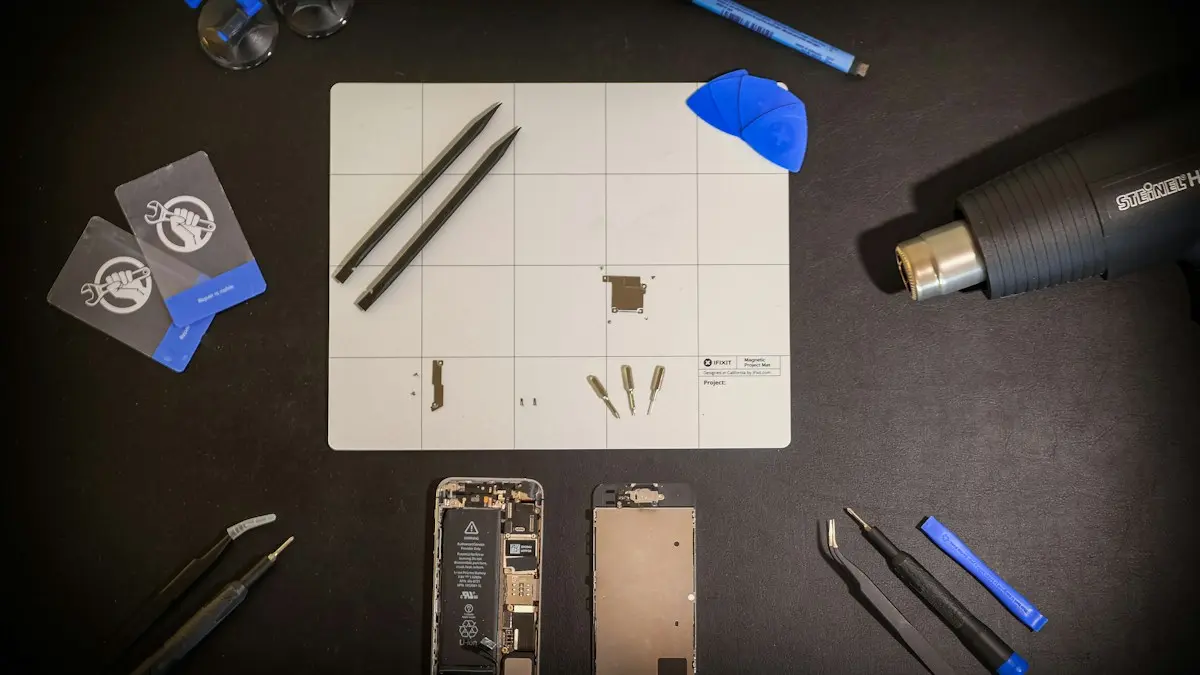
A display that lights up but has a scratched glass, an iPhone with a damaged case, or a MacBook with worn aesthetic components don't always require a new replacement. Refurbished parts can be a practical choice to reduce repair costs and keep the device operational, provided that the origin, tests, and compatibility are properly verified.
For a repair shop, the value is not solely based on the purchase price. Technical time, return risk, component stability after installation, and the final customer experience matter. A valid refurbished part must therefore be assessed like any other part intended for professional repair: for exact model, functional conditions, and actual quality of restoration.
What Refurbished Parts Really Are
A refurbished part is a component recovered from a used device, subjected to checks and, when necessary, restoration interventions. It does not automatically coincide with a new original part and should not be confused with a new compatible component.
Refurbishment can involve different elements. In displays, for example, it may consist of replacing the outer glass while maintaining the original OLED or LCD panel; in cases, it may include cleaning, aesthetic refurbishment, and checking installed elements. For some electronic modules, the process requires more rigorous functional testing and potential replacement of worn parts.
The definition alone is not enough to determine quality level. Two components labeled as refurbished can have very different conditions. The crucial point is to know which parts have been preserved, which have been replaced, and what tests were performed before sale.
When Refurbished Parts Are a Sensible Choice
The solution is particularly attractive when the customer seeks a balanced repair for a not-so-recent device that is still perfectly usable. For models with limited residual value, installing a high-end new component can disproportionately impact the quote. A well-selected refurbished part allows maintaining correct margins without proposing an expense that is inconsistent with the product's value.
It is also a useful option when one wants to preserve a feature present in the original component. A refurbished Apple display that retains the native panel, when properly tested, can offer color rendering, brightness, and touch response closer to the expected experience compared to some budget-friendly compatible alternatives. This does not eliminate the need for checks but explains why the professional market often resorts to this type of part.
The opposite case is equally important. If the device is recent, still under commercial warranties, or intended for a customer demanding flawless aesthetics and uncompromised performance, a new component may be more appropriate. The choice is not between a right and wrong solution: it depends on model, defect, budget, availability, and intended use.
Refurbished Displays: The Case that Requires More Checks
Displays are among the most common refurbished parts and also among those that deserve a more precise evaluation. Simply lighting up the panel is not sufficient to deem it suitable. During component acceptance, it’s wise to check the uniformity of backlighting or OLED emission, touch sensitivity across the entire surface, and the presence of halos, lines, spots, abnormal pixels, and the response of the proximity sensor, if integrated.
The assembly quality should also be checked. A misaligned frame, poorly positioned gasket, or glass with inadequate finishing can turn initial savings into a post-repair dispute. On iPhone models with functions related to components associated with the logic board, the technician must also consider any system messages and limitations of calibration functions.
Not all refurbished displays maintain the same characteristics as the original component. The presence of a recovered panel does not guarantee, for example, the automatic preservation of every software or biometric function. Before the quote, it is correct to clarify what is being restored, what may require additional technical transfers, and what warnings may appear after the intervention.
How to Assess Quality and Compatibility
A professional purchase starts from the exact model, not the aesthetic similarity of the replacement. Compatibility should be verified considering device code, generation, regional variants when relevant, and hardware configuration. Two models with similar dimensions may use different flats, connectors, sensors, or brackets.
Before installation, it is helpful to carefully inspect connectors and flat cables. Noticeable bends, oxidized contacts, adhesive residue in critical areas, or damaged shielding are signals that require caution. The presence of small transferable parts - grids, supports, screws, gaskets, and brackets - should also be checked against the planned repair procedure.
For the repair shop, traceability is an operational advantage. Recording lot number, receipt date, serviced model, and test results allows for quick identification of any recurring issues. This is not unnecessary bureaucracy: it reduces diagnosis times in case of a return and helps distinguish a fault in the replacement from a pre-existing issue with the device.
Testing Before Closing the Device
Testing should be conducted before permanently applying adhesives and sealants. In the case of a smartphone, checks typically include startup, touch, image, cameras, earpiece speaker, sensors, charging, and functions requiring connection to the replaced component. For tablets and laptops, hinge stability, screen behavior at different brightness levels, and proper positioning of cables and antennas should also be evaluated.
This phase protects both the technician and the customer. Closing the device without complete testing increases the cost of a potential second intervention and can compromise perfectly functioning components during an unnecessary reopening.
Lower Price Doesn't Always Mean Value
The economic advantage of refurbished parts must be calculated on the total cost of the repair. If a component costs less but has a higher defect rate, requires rework, or leads to downtime, the savings quickly diminish. For a repair center, a reliable part also means predictability in results.
It is useful to transparently separate the offering: new, compatible, and refurbished parts are alternatives with different characteristics. Presenting the available options to the customer, along with aesthetic and functional conditions, makes the quote clearer and limits unrealistic expectations. In particular, a refurbished part may have normal minimal signs consistent with the recovery process unless otherwise specified.
The warranty offered by the shop must align with the installed component and the nature of the repaired defect. It makes no sense to attribute responsibility to the replacement for liquid damage, casing deformations, subsequent drops, or motherboard issues unrelated to the intervention. A documented initial diagnosis remains the best starting point.
Errors to Avoid in the Repair Shop
The first mistake is choosing based solely on a generic description. Indications such as “for iPhone” or “for MacBook” are insufficient without referencing the exact model. The second is mounting the component without preliminary testing, especially when the intervention involves adhesives, module transfers, or complex disassemblies.
The third mistake concerns tools. A valid replacement can be compromised by improper levers, uncontrolled heat, swapped screws, or incomplete cleaning of surfaces. To work continuously, adequate tools, reliable consumables, and repeatable procedures are needed. iPhoneHospital.it addresses this need: sourcing components and technical equipment in the same purchasing flow, with a selection organized by family and model.
Finally, avoid promising absolute equivalence when it cannot be verified. Technical precision means explaining to the customer what is being installed and why that solution is suitable for their device.
Refurbished Parts and Responsible Repair
Recovering a still-functional component helps extend the life of devices and reduces the premature replacement of electronic parts. However, the benefit only exists if the replacement is tested and the intervention is performed correctly. Reusing a defective or unverified part is not a sustainable choice: it simply shifts the problem to the next repair.
For every job, the useful question is not “how much cheaper is it?”, but “what result can I guarantee with this component?”. If the answer is clear after verifying compatibility, testing, and sales conditions, refurbished parts become a concrete resource for providing more affordable repairs without lowering technical standards.
Useful Parts and Tools: Laboratory Accessories