


Which Display to Choose for iPhone
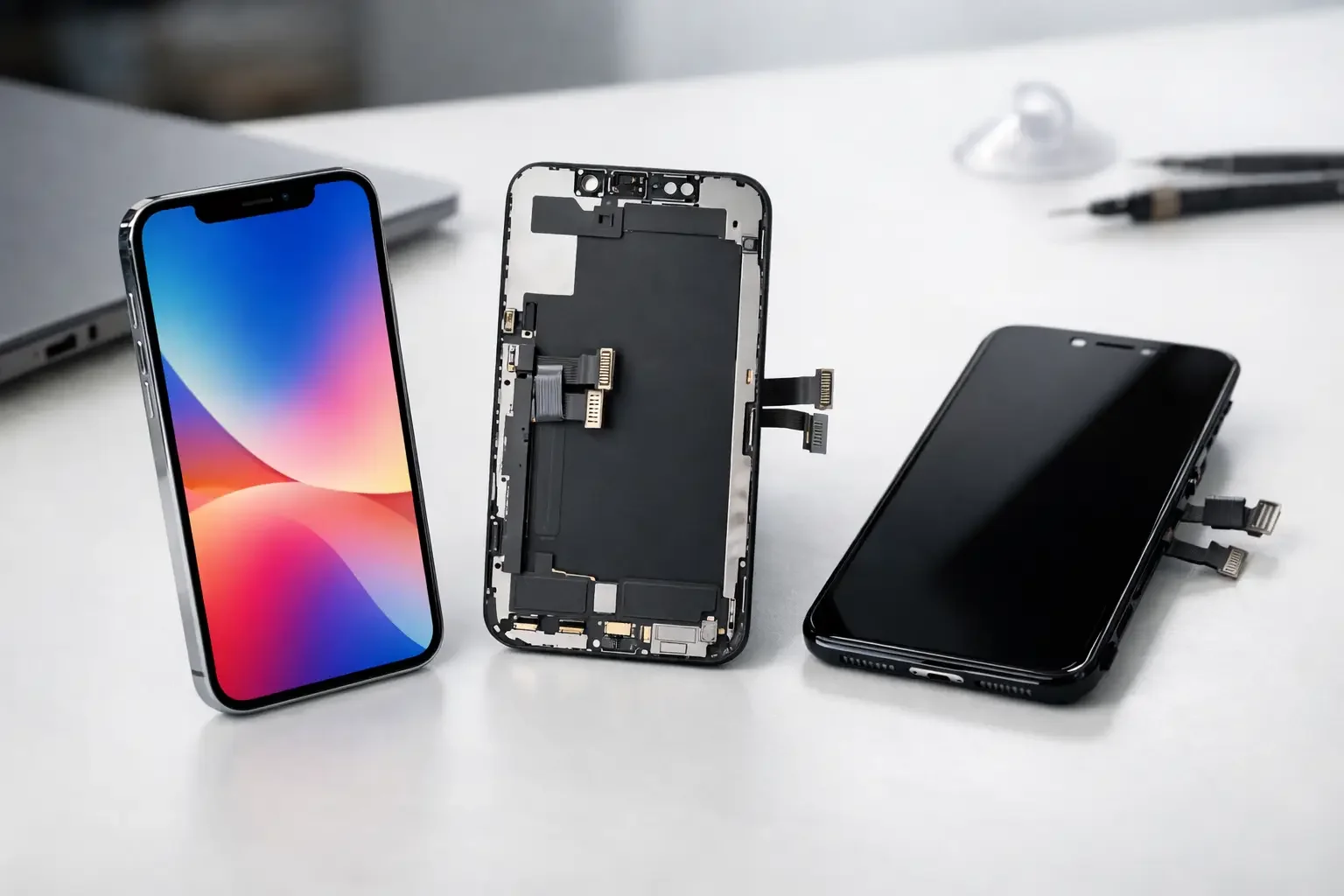
When deciding which display to choose for iPhone, it’s not just about finding a compatible replacement. The real issue is selecting the right panel based on model, required quality, available budget, and type of repair. A low-cost display may suffice for some repairs, while others might lead to returns, complaints, or a visual quality that does not meet customer expectations.
For those repairing iPhones daily, the choice of display affects three very tangible aspects: image quality, long-term reliability, and the margin of the intervention. For the knowledgeable user purchasing independently, the focus is mostly on avoiding compatibility errors and understanding what truly differentiates the various types available.
Which Display to Choose for iPhone Based on Technology
The first useful distinction is between original quality displays, compatible OLEDs, Incell, and cheaper aftermarket versions. Not all categories are available for every model, and not all provide the same results.
For models originally equipped with OLED screens, such as iPhone X and subsequent high-end models, installing an OLED panel maintains performance closer to the factory unit. Blacks appear deeper, contrast is better, and power consumption is generally more aligned with the device’s design. If the customer is focused on display quality, this is usually the most sensible choice.
Incell displays are often chosen to reduce repair costs. For some models, they represent an acceptable compromise, but they need careful evaluation. They may have lower brightness, slightly different thickness, varying power absorption compared to the original, and a touch response that differs based on the manufacturer. In a professional context, they are useful when budget is the top criterion and the customer accepts a lower quality level compared to OLED or original quality.
Low-end aftermarket versions are the ones that require the most selectivity. The problem is not just the aesthetics of the panel but also production consistency. Cold colors, less precise touch, glass fragility, and abnormal battery consumption are recurring issues when choosing based solely on price.
The Real Difference Between OLED, Incell, and Compatible
Commercially, many products are described similarly, but the differences quickly become apparent during installation. A well-made OLED delivers solid blacks, better readability, and a visual experience closer to the original Apple. This is particularly important for models like iPhone X, XS, 11 Pro, 12, 13, and later series, where users can easily perceive if the panel is of low quality.
Incell, on the other hand, is often marketed as an economical alternative. It works, but it should not be presented as an absolute equivalent to OLED. In practice, technicians know that the customer might notice different brightness, less uniform edges, or different behavior under strong ambient light. If the repair is for a used device, secondary phone, or one being resold at a lower price, it might make sense.
The generic compatible display is the broadest and least homogeneous category. Here, the supplier’s selection is crucial. It is not enough to check model compatibility; clear information about panel technology, touch quality, assembly, and presence of pre-installed components is necessary.
Model Compatibility: The Most Common Mistake
Understanding which display to choose for iPhone first means accurately identifying the model. It may seem trivial, but a significant portion of errors stems from this. The iPhone XR does not use the same display as the iPhone 11, even if the devices may appear similar at first glance. The same goes for the Pro, Pro Max, Plus, and various SE generations.
In a professional setting, it is useful to always check the model number, production year, and exact device family. When dealing with replacements for iPhone 12, 13, 14, or 15, even a minimal variant difference can lead to physical or functional incompatibility.
Pay attention to the components that need to be transferred from the original display. In many cases, ear speakers, sensors, brackets, or other elements are not included in the new screen assembly. This affects processing times and the risk of error during assembly.
When It Makes Sense to Choose a Premium Display
A premium display makes sense when the priority is to maintain high perceived quality and reduce post-repair disputes. It is the correct choice for recent phones, high-value devices, or customers who heavily use the display for photos, videos, work, or daily browsing.
There is also an operational aspect to consider. A higher quality panel tends to reduce issues related to intermittent touch, uneven brightness, and color reproduction that differs from the original. This means fewer returns to the workshop and less time spent on aftercare.
For top-end models, offering a too-cheap replacement often proves unwise commercially. The initial savings can turn into a negative perception of the repair. If the customer is holding an iPhone 13 Pro or a 14 Pro Max, the expected level is higher, and the difference between a good unit and an inexpensive one is immediately noticeable.
When an Economical Display May Make Sense
Not always is the highest tier necessary. If the phone is old, meant for resale, used as a secondary device, or put back into service with a limited budget, an economical compatible display may be the right choice. The key is to set proper expectations.
Here, the focus is not on selling the most expensive solution but rather the one most suitable for the actual case. For iPhones with low residual value, offering a premium OLED may not be proportionate. In these situations, a good compatible or selected Incell allows for a sustainable repair.
For the workshop, this approach is also beneficial in building the offer. Having at least two quality tiers for the same model allows for better management of diverse requests and different margins.
Face ID, True Tone, and Functions to Preserve
When choosing a display for iPhone, one should not only consider the panel. The impact on the device's functions must also be taken into account. The most well-known topic is True Tone, which on many generations requires programming the original display data to be maintained after replacement.
Face ID, on the other hand, does not depend on the display itself but can be compromised by errors while relocating components associated with the upper assembly. Therefore, an experienced technician assesses the replacement not only for image quality but also for ease and safety of installation.
On some very cheap units, warning messages, abnormal consumption, or behavior not fully consistent with the device's software may also emerge. This is not an absolute rule but a scenario to consider when working on more recent models.
What to Check Before Purchasing
Before placing an order, it’s useful to verify some elements quite practically. The first is the actual technology of the panel. The second is the exact compatibility with the iPhone model. The third is the quality level declared by the supplier.
Understanding whether the display is provided as a complete group or requires transferring multiple components is also crucial. The presence of a commercial warranty on the replacement and consistent inventory make a difference, especially for workshops and service centers that need to reorder the same standard over time.
For a correct technical purchase, the criterion should never be just the unit price. The total cost of the intervention should be considered, including the risk of defects, bench time, and any post-sale management.
Which Display to Choose for iPhone if You Work in Repairs
For a workshop, the answer to which display to choose for iPhone varies based on the type of clientele. If you work on quick repairs with strong pricing leverage, it makes sense to maintain a reliable compatible line and a premium one for the most requested models. If your positioning centers on quality and reducing returns, standardizing on higher-tier panels is advisable.
A well-constructed assortment avoids two typical problems: tying up capital on too many unnecessary variants and losing jobs due to the lack of the correct replacement for incoming models. In this scenario, a specialized supplier like iPhoneHospital.it is valuable, especially for catalog depth and model classification, which are two elements that reduce purchase errors.
The most useful rule remains: the right display is not the least expensive nor the most costly. It is the one consistent with the model, with the level expected by the customer, and with the quality you want to guarantee for the intervention. If this evaluation is done correctly before the order, the repair starts off on the right foot.
Useful spare parts and tools: Batteries